

Tax Advantages of Owning Your Flex Warehouse Near Austin (Bonus Depreciation Examples)
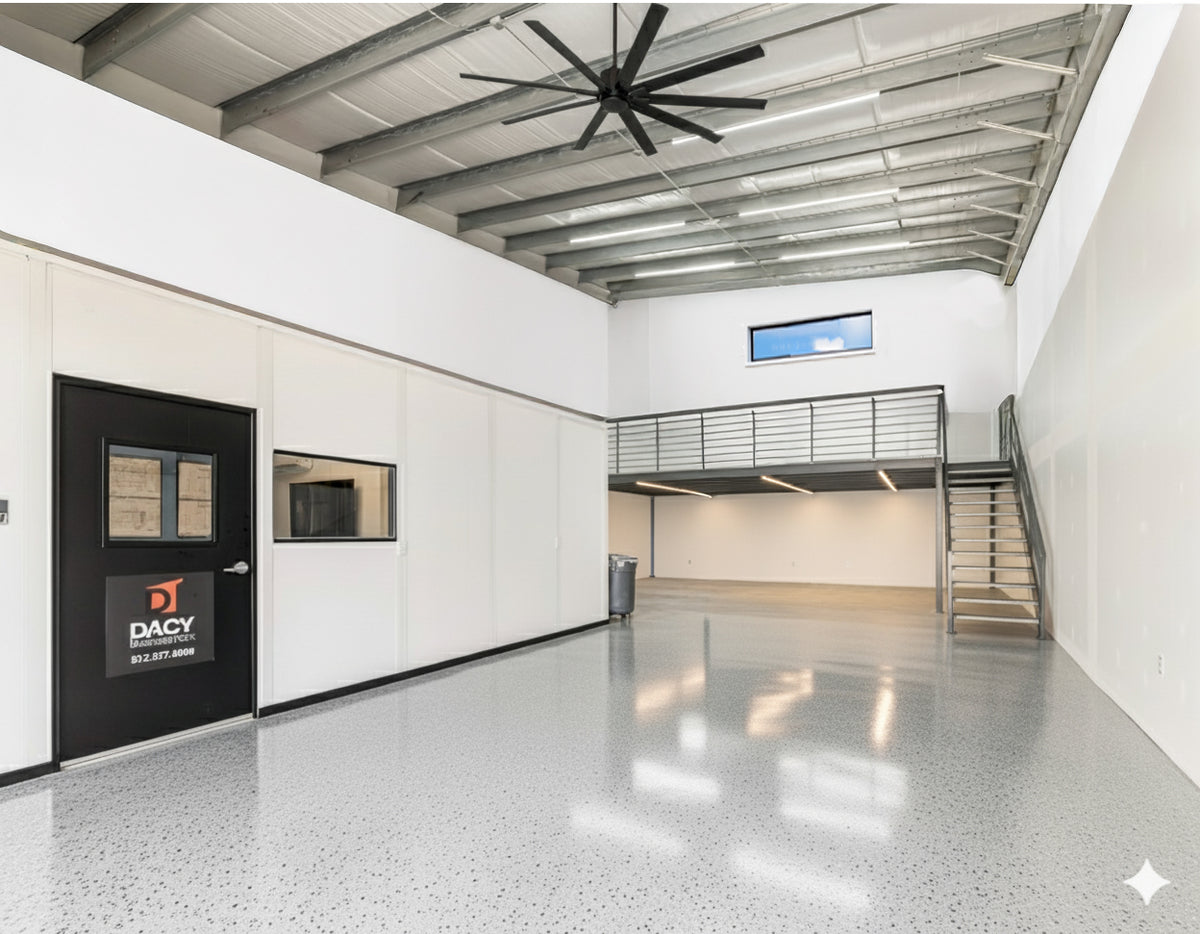
Hero: finished Dacy suite with mezzanine (Kyle, TX).
If you run a trade, shop, or light industrial business south of Austin, every month of rent is money that never comes back. Owning the flex warehouse you operate from can flip that equation: you build equity, control the space, and — when the numbers work with your CPA — unlock depreciation and bonus write-offs that renters simply do not get.
At Dacy Business Park in Kyle, TX (3300 Dacy Lane), flex warehouse condos are offered for sale and for lease, with lease-to-own options available. Sales start from the mid-$300,000s. Leases start from about $1,998 per month and include NNN. The park sits about three minutes from I-35, so crews stay close to Kyle, Buda, South Austin, and San Marcos job sites.
This guide focuses on the tax and cash-flow case for ownership, including how bonus depreciation and cost segregation can accelerate write-offs on offices and other short-lived components inside a Dacy-style suite. It is not a substitute for advice from your own tax professional.
Own vs lease: what changes for your taxes
When you lease, rent is usually deductible as an ordinary business expense. That helps year to year, but you never own the asset and you do not depreciate the building.
When you own the commercial suite your business uses (or you hold it in an entity that leases it to the operating company — structure matters; ask your CPA), you typically:
- 🏦 Build equity instead of only paying a landlord
- 📈 Deduct interest on acquisition financing (subject to current interest-limitation rules)
- 🧾 Deduct property taxes, insurance, and operating costs that fall on the owner
- 🏗️ Depreciate the building and improvements over IRS recovery periods
- ⚡ Potentially accelerate large first-year deductions through cost segregation plus bonus depreciation on qualifying property
For many Kyle / South Austin shop owners, the strategic question is not “is rent deductible?” — it usually is — but “am I building an asset while I write costs off?”
Bonus depreciation in plain English (2025–2026 context)
Bonus depreciation (IRC §168(k)) lets you deduct a large percentage of the cost of qualified property in the year it is placed in service, instead of spreading that deduction over many years.
Under current federal law as of mid-2025, 100% bonus depreciation was permanently restored for qualifying property placed in service after mid-January 2025 (check the exact placed-in-service date and bill language with your CPA — this area moved quickly). That means eligible short-lived assets can often be written off in year one at 100%, subject to your overall tax situation, income, and any special rules that apply to your entity.
Important limits to say out loud:
- 🚫 Land is not depreciable
- 🏢 The building “shell” for commercial real estate is usually a 39-year asset — it does not get full bonus depreciation as a single lump
- 🔧 What does often qualify after a proper study are shorter-lived pieces: certain 5-, 7-, and 15-year property (furniture, fixtures, equipment, land improvements such as parking/landscaping, and other components identified in a cost segregation study)
- 🛠️ Qualified Improvement Property (QIP) — certain interior non-structural improvements to nonresidential buildings — can also sit on a shorter recovery period and interact with bonus rules
None of this is automatic. Classification and documentation matter, especially under IRS scrutiny.
Cost segregation: why “the office at Dacy” matters
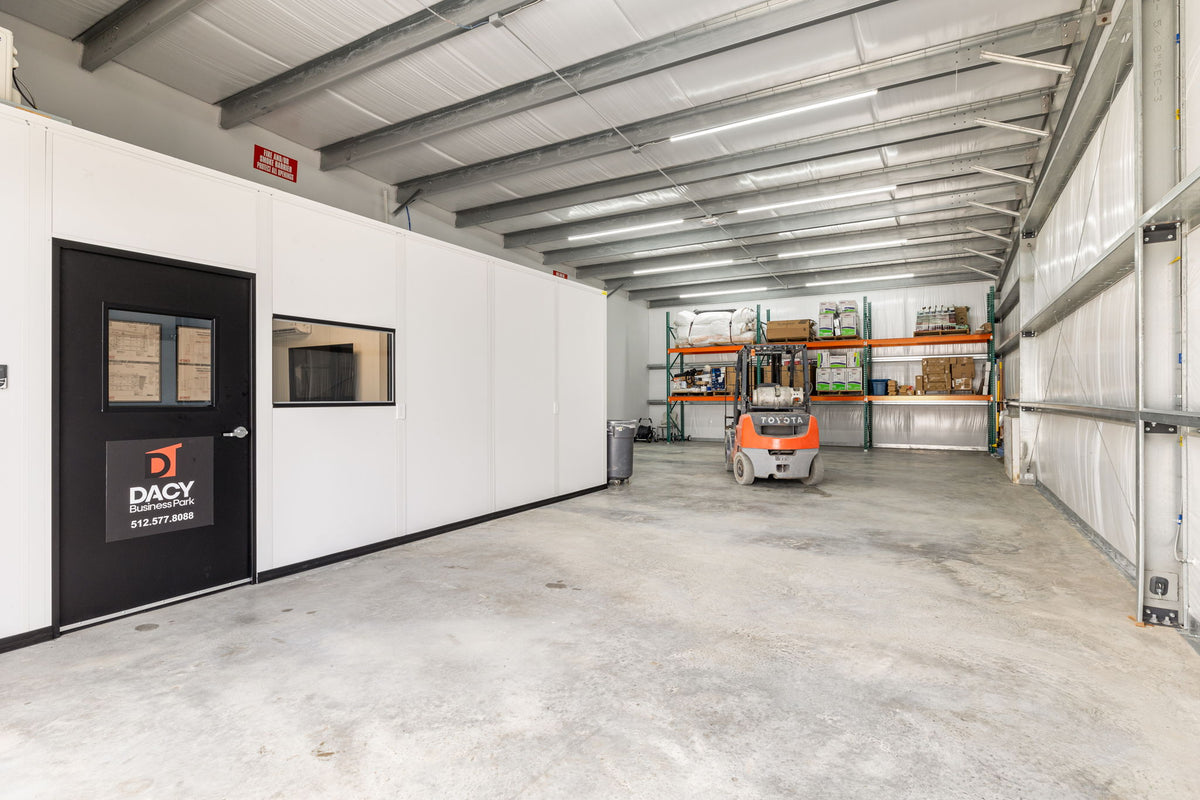
Finished modular office build-out — often where cost segregation finds short-lived assets.
A cost segregation study is an engineering-based breakdown of a purchased (or constructed) building into components with different tax lives. Instead of treating nearly everything as 39-year real property, the study reallocates eligible pieces into faster classes.
For office-heavy or flex suites, studies commonly identify items such as:
- 🚪 Modular / demountable office partitions and millwork
- ❄️ Dedicated office HVAC (mini-splits serving finished offices)
- 🔌 Low-voltage data cabling, access control, specialty lighting
- 🪑 Freestanding office furniture and fixtures (often 7-year)
- 🅿️ Parking, paving, and site improvements (often 15-year)
Industry benchmarks for office-type commercial property often reclassify roughly the mid-teens to high-20s percent of depreciable building basis into those shorter lives (exact percentages vary widely by finish level). With 100% bonus depreciation available on those reclassified amounts (when they qualify), year-one deductions can be much larger than straight-line 39-year depreciation alone.
That is the concrete meaning of “writing off offices at Dacy due to bonus depreciation”: you are not magically expensing the entire warehouse shell in year one. You are accelerating deductions on the office build-out, FF&E, and other short-lived pieces that a proper study (and your CPA) can support.
Illustrative examples (not quotes, not advice)
These examples use round numbers so the mechanics are clear. They are hypothetical. Purchase prices, land vs building allocation, cost-seg results, tax brackets, passive-activity rules, and Texas franchise / federal interactions all change the outcome. Have your CPA run your numbers.
Example A — Buy a mid-$300Ks flex suite
Assume a buyer closes on a Dacy-style flex condo for $350,000.
- 💰 Rough allocation (illustrative only): $70,000 land (not depreciable) + $280,000 building/improvements
- 📅 Without cost segregation: $280,000 ÷ 39 ≈ $7,200/year straight-line building depreciation (simplified; mid-month conventions and improvements change this)
- 🚀 With a cost segregation study that reclassifies 22% of the $280,000 (~$61,600) into 5-/7-/15-year property eligible for 100% bonus: Year-1 bonus-eligible write-off ≈ $61,600 (plus remaining basis still depreciates over longer lives). At a combined federal rate of 32% (example), that could mean roughly ~$19,700 of federal tax savings on the accelerated piece alone in year one — before counting interest, property tax, and ordinary ops
Again: land share, study quality, and your taxable income decide whether those savings are real for you.
Example B — Office-heavy finish vs bare bay
Two owners buy similar-sized suites at the same price.
- 📦 Owner 1 buys a mostly open warehouse bay with a small unfinished office. Cost segregation finds a smaller share of short-lived assets — say 15% of depreciable basis.
- 🖥️ Owner 2 buys (or builds out) a suite with a full modular office, dedicated mini-splits, millwork, cabling, and furniture. The study finds 25–28% in shorter classes.
Owner 2 typically has more first-year bonus depreciation opportunity on the office package — which is exactly why finished offices at a flex park like Dacy can matter for tax planning, not only for day-to-day operations.
Example C — Rent for five years vs own for five years (cash + tax lens)
Suppose a shop pays about $2,000/month rent (near Dacy’s published starting lease range including NNN). Over five years that is roughly $120,000 in rent — deductible, but gone.
An owner who bought near the mid-$300Ks may have paid interest, taxes, HOA/park dues, and insurance instead — also largely deductible when properly structured — while the principal portion of loan payments builds equity and the depreciable basis generates depreciation (and possibly large year-one bonus amounts via cost seg).
Which path wins on after-tax cash depends on down payment, rate, appreciation, and how long you hold. Many owners still prefer ownership because the rent check stops buying someone else’s building.
SEO takeaways for shop owners searching near Austin
If you are googling phrases like “tax advantages of owning commercial property,” “bonus depreciation warehouse,” or “own vs lease flex space Kyle TX,” keep this checklist:
- ✅ Rent is deductible; ownership can be deductible and build equity
- 🔍 Bonus depreciation targets qualified short-lived property, often unlocked by cost segregation — not the entire land+building sticker price
- 🏢 Finished offices, FF&E, parking, and site work are where many flex buyers see acceleration
- 👤 Structure (buy in an LLC, lease to your operating company, material participation) can change what you can use this year — CPA required
- 📍 Local product reality matters: at Dacy, sales from the mid-$300,000s and leases from about $1,998/mo (NNN included in that starting figure) let you compare paths with real published anchors
How Dacy fits the ownership story
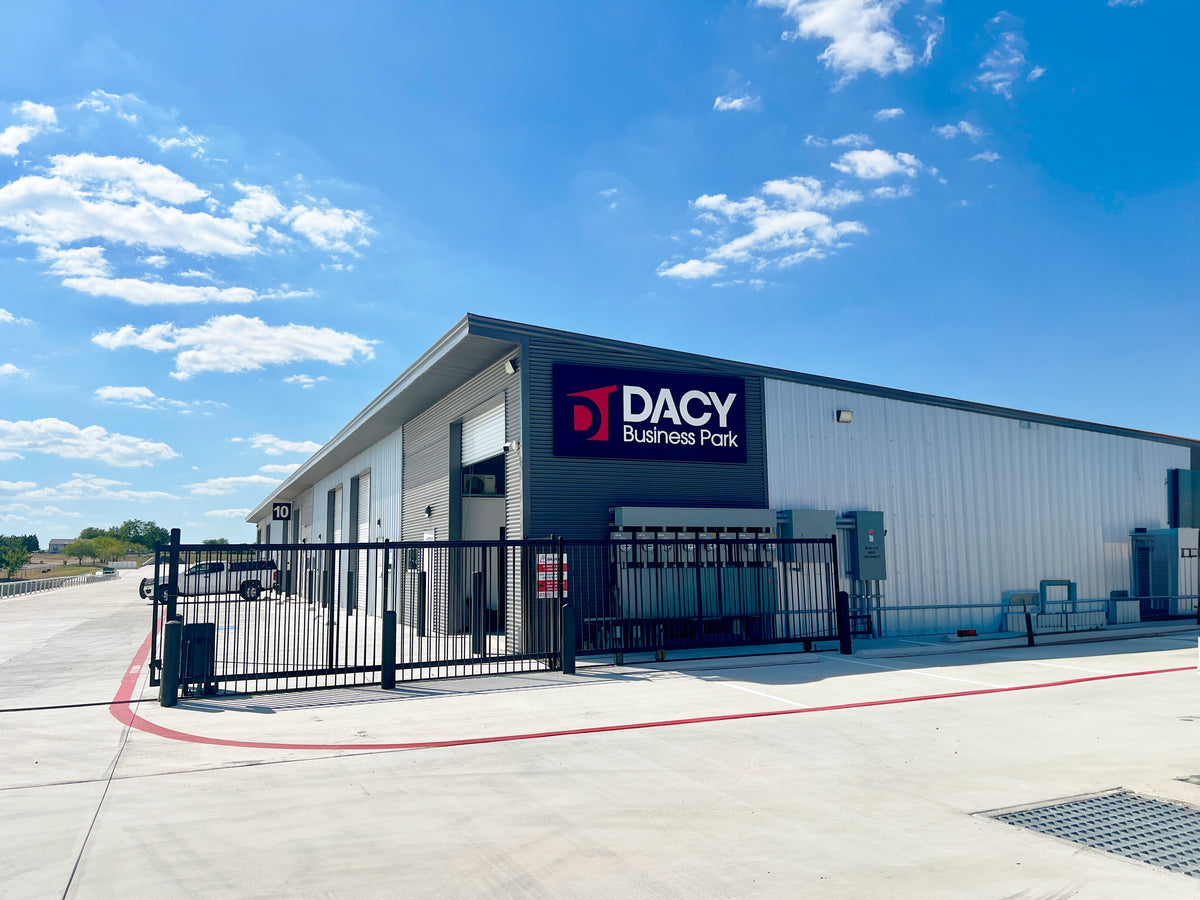

Dacy Business Park is a gated flex warehouse community in Kyle with a master plan of 13 buildings and about 137,550 square feet across four phases. Typical footprints include common sizes such as about 1,200, 1,650, or 3,300 SF, with paths to combine suites as you grow. Phase availability changes — Phase 1 sold out; check current Phase 2 inventory and Phase 3 timing (publicly discussed around early 2027) before you plan a purchase year for tax placement.
Owning here is not only a Kyle / I-35 location play. For owners who finish modular offices and operate from the suite long-term, it is also a depreciation planning play — provided your advisors document it correctly.
What to do next (and what not to DIY)
- 👀 Tour suites and get a written purchase or lease-to-own quote for the unit you actually want
- 💼 Ask your CPA whether a cost segregation study makes sense at your price point and tax bracket
- ⛔ Do not treat blog examples as filing positions
- 🤝 If you need the shop now and ownership later, ask about lease-to-own so occupancy and the purchase path can line up with your tax year
Talk to Sam Lee for current inventory: 512-577-8088 or sales@dacybusinesspark.com. Also see our guides on lease-to-own warehouse space, why Kyle TX, flex vs traditional warehouse, and what size warehouse you need — or contact us / review the site plan. Dacy Business Park — 3300 Dacy Lane, Kyle, TX 78640.
Educational marketing only. This article is not tax, legal, or accounting advice. Consult your own CPA or tax advisor before making ownership, depreciation, or filing decisions.